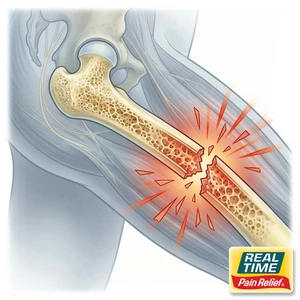
Bone Stress Injuries: When Repetition Becomes More Than Soreness
Posted by Dennis R Escalera on 1st Oct 2026

Not every bone injury begins with a fall, collision, or sudden crack. Sometimes the problem develops quietly, one repeated load at a time. A bone stress injury occurs when the demand placed on a bone outpaces its ability to repair and adapt. The earliest stage may involve microscopic damage and a stress reaction. If loading continues without enough recovery, the injury can progress to a stress fracture—a small crack in the bone.
Bone stress injuries are often associated with runners and military recruits, but they can affect anyone who changes activity too quickly. A new walking program, extra hours on a hard surface, a sudden increase in sports practice, or a return to exercise after a long break can all create more load than the body is ready to manage. Bone health, nutrition, hormones, footwear, movement mechanics, and recovery influence who develops an injury.
Adaptation Needs Time
Bones respond to physical stress. Controlled loading is one reason weight-bearing activity can support skeletal health. But adaptation occurs over time, not overnight. When a person increases distance, intensity, frequency, or impact too rapidly, the cycle of normal bone repair may fall behind.
Muscles also help absorb force. Fatigued or underconditioned muscles may transfer more stress to bone. This helps explain why an activity can feel comfortable at first but become problematic after repeated sessions. The issue is not that movement is harmful. The issue is a mismatch between load and recovery.
Training errors frequently involve more than mileage. Switching from a soft surface to concrete, adding hills, changing footwear, beginning high-impact classes, or stacking hard days without rest can alter the force a bone experiences. Even work routines can matter. Long shifts involving walking, climbing, or carrying may add substantial load before exercise begins.
The Pain Pattern Is a Clue
Ordinary muscle soreness is often diffuse, appears after unfamiliar activity, and improves over several days. A bone stress injury more often produces pain in a specific location. At first, discomfort may occur only near the end of activity and ease with rest. As the injury progresses, pain may begin earlier, linger afterward, appear during normal walking, or be present at rest.
Tenderness directly over a bone is another warning sign. Swelling may occur, although it is not always present. Lower-extremity sites—including the foot, ankle, shin, and hip—are common because they absorb repeated weight-bearing forces. The exact presentation varies by location, and some high-risk injuries can be difficult to recognize without imaging.
Pain that is sharp, pinpoint, worsening, or repeatedly returns at the same spot should not be dismissed as a normal part of getting in shape. Neither should a limp or a change in movement used to avoid pain. Compensation can place new stress on other tissues and does not solve the original problem.
Who Is at Greater Risk?
Anyone can develop a bone stress injury, but risk rises when training load increases faster than the body can adapt. Beginning a new activity, returning after illness or injury, or preparing quickly for an event can create this pattern. Repetitive impact, inadequate recovery, and worn or unsuitable footwear can contribute.
Underlying bone strength matters as well. Low bone mineral density, osteoporosis, insufficient energy intake, low calcium or vitamin D status, and hormonal disruption may reduce the bone’s capacity to recover. In active people, consistently eating too little for the energy demanded by exercise can affect bone and other body systems. This can occur in people of any body size and is not limited to elite athletes.
Age alone does not define the risk. A younger athlete may overload otherwise healthy bone, while an older adult or someone with low bone density may develop an insufficiency fracture under loads that would normally be tolerated. A clinician may use the injury pattern as a reason to assess nutrition, menstrual or hormonal history, medication use, bone density, and other health factors rather than treating the crack as an isolated event.
Why “Pushing Through” Can Backfire
The early discomfort of a stress reaction may seem minor, tempting a person to finish the workout, workweek, or training plan. But continuing the same impact can allow microscopic damage to grow. A more advanced fracture generally requires a longer recovery and may be more difficult to treat. Certain locations also have limited blood supply or carry a greater risk of displacement and complications.
Pain is information, not a test of character. Stopping or modifying an activity is not failure. It is a way to preserve the possibility of returning safely. Cross-training is not automatically safe either; the alternative must actually reduce load on the injured area. Cycling, swimming, or resistance training may be appropriate in some cases, but the choice should follow professional guidance when a fracture is suspected.
How Bone Stress Injuries Are Diagnosed
A healthcare professional will ask when pain began, where it occurs, what changed in activity, and whether there are risk factors for poor bone health. Examination may identify focal tenderness, swelling, pain with loading, or altered walking mechanics.
Early stress injuries do not always appear on a standard X-ray. Depending on the location, timing, and level of concern, magnetic resonance imaging or another test may be used. This is one reason a normal early X-ray does not always close the case when symptoms and examination strongly suggest bone stress.
Seek prompt evaluation for pain that prevents normal weight-bearing, produces a limp, worsens with each session, persists at rest or at night, or is sharply localized over a bone. Sudden severe pain, visible deformity, numbness, loss of circulation, or inability to use the limb warrants urgent care.
Recovery Is More Than Waiting
The central principle of treatment is reducing stress on the injured bone long enough for healing. Depending on the site and severity, this may involve activity modification, protective footwear, crutches, a brace, or other measures. Some fractures need specialist care or surgery. A return-to-activity plan should be gradual and based on healing, absence of pain, restored strength, and the demands of the activity—not solely on a date on the calendar.
Recovery also creates an opportunity to address why the injury happened. A clinician may review training progression, nutrition, vitamin D or calcium concerns, hormone health, bone density, footwear, technique, sleep, and recovery time. Physical therapy can help rebuild strength and correct movement patterns while preserving overall conditioning.
When activity resumes, only one variable should change substantially at a time. Increasing distance, speed, hills, and frequency together makes it difficult for the body to adapt and difficult for the person to identify what triggered symptoms. Planned lighter days are part of training, not an interruption to it.
Prevention Without Fear of Movement
Avoiding all loading is not the goal. Bones need appropriate challenges. The practical approach is progressive loading supported by recovery. Begin below the maximum you think you can tolerate. Increase in small increments. Include strength work to improve the muscles that manage force, and use sport- or activity-specific conditioning before adding high intensity.
Eat enough to support daily life and exercise. Include calcium-rich foods and reliable sources of vitamin D as appropriate. People with dietary restrictions, digestive disorders, a history of stress injuries, or concerns about low energy availability should consider professional nutrition guidance. Supplements are not a substitute for evaluation and should not be taken in high doses “just in case.”
Pay attention to surfaces and equipment. Shoes should match the activity and be replaced when their support or tread is worn. Sudden transitions—such as moving all workouts outdoors onto pavement—deserve a slower buildup. After time away, return at a lower level than where you stopped.
Where Topical Relief Fits
Real Time Pain Relief products are designed for the temporary relief of minor aches and pains of muscles and joints when used as directed. They are not a treatment for a bone stress injury and cannot make it safe to continue impact on a suspected fracture. If discomfort feels like ordinary surrounding muscle fatigue and no injury warning signs are present, follow the label and monitor the response. If the pain is focal, persistent, worsening, or connected with weight-bearing, pause the activity and seek medical guidance.
This distinction protects the purpose of pain relief. Comfort can support daily life, but it should not erase the signal that a bone may need rest and assessment. When in doubt, choose information over intensity.
Build Capacity, Then Build Challenge
Healthy movement depends on the relationship between stress and recovery. A well-designed program gives bones time to adapt, muscles time to grow stronger, and the whole body enough energy to repair. Progress that looks slower on paper may keep a person active more consistently over months and years.
Persistent pinpoint pain is not a badge of commitment. Recognizing it early can shorten the path back to the activities you enjoy. Increase gradually, recover deliberately, and treat a repeated warning from the same spot as a reason to investigate—not an obstacle to ignore.
Editorial References
- American Academy of Orthopaedic Surgeons, OrthoInfo. “Stress Fractures.” https://orthoinfo.aaos.org/en/diseases--conditions/stress-fractures/